
A Woman’s Song
A Woman’s Song: Podcast Transcript
Olivia
So granny used to read poetry to me.
Robert
Yeah, I mean, you know, just talking to granny sometimes would sound like poetry because anytime she would talk to you just be like so much detail and all of that, you know, was like listening to a book. And she was very, you know, creative and imaginative. And then I think you also have like one of a poem.
Olivia
To me, my granny split down the middle. On one side, she is a painter and impregnable realm, while on the other, she is a poet, a writer, like me.
I sat down with my dad to rebuild my granny’s life, her poetry.
When I was born, she wrote me a poem, a summer flower, it reads:
Shall I compare you to a dainty violet? It’s bright eyes peering through its blanket of soft leaves, or perhaps to a velvet pansy, with pretty butterfly wings. Oh, no, not you, Olivia, your summer flower, a glowing, silky rose, to sweet to bear a thorn. But we will hold you with gentle hands. So Blessed are we, that you were born.
Robert
Her poems were very deep into imagery, right? So they were very detailed a lot of things about you know, outside and you know, sometimes some of her poems were a little bit dark and sad. But she just, she just loved to write
Olivia
Yeah, actually happens. I have the woman’s songs, loved it, no poems. And then I have this one’s actually a handwritten one. This one’s kind of dark.
Robert
Right, so you know, there were about there’s, I guess, 31 poems in here.
Olivia
When my granny died, my dad was working at a printing company. He put together a pamphlet, a pamphlet of her poems, a pamphlet of her thoughts of her life.
Robert
I just wanted to make sure that we kind of had a tribute to her as to all of the different poems she had. And I work with your your grandfather on this to pick which ones we would put in here. So they’re very, you know, like almost like songs.
Olivia
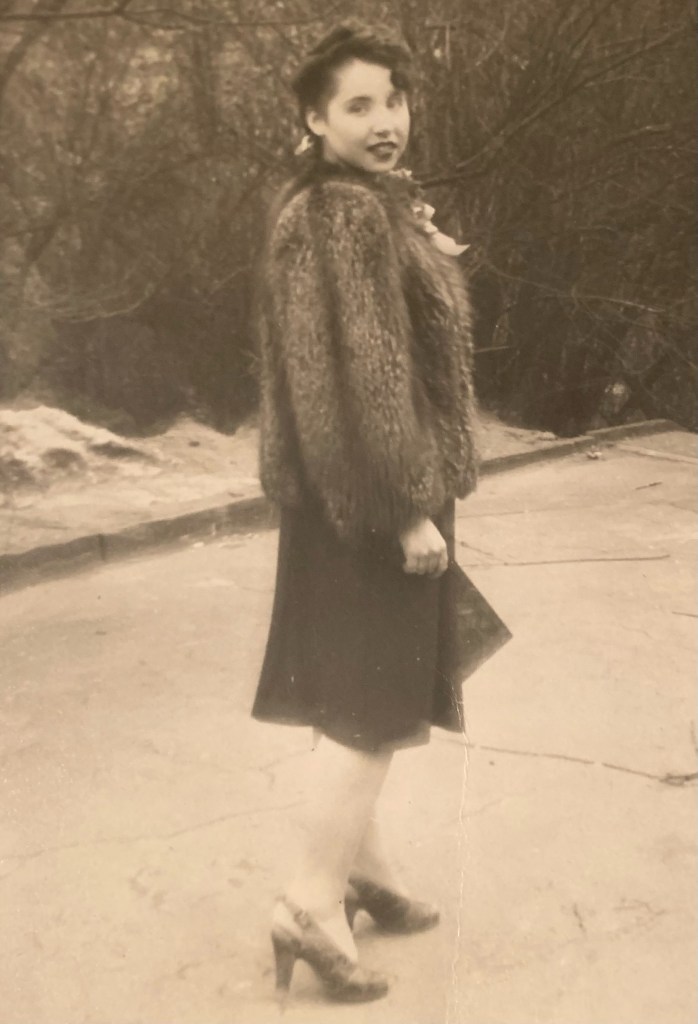
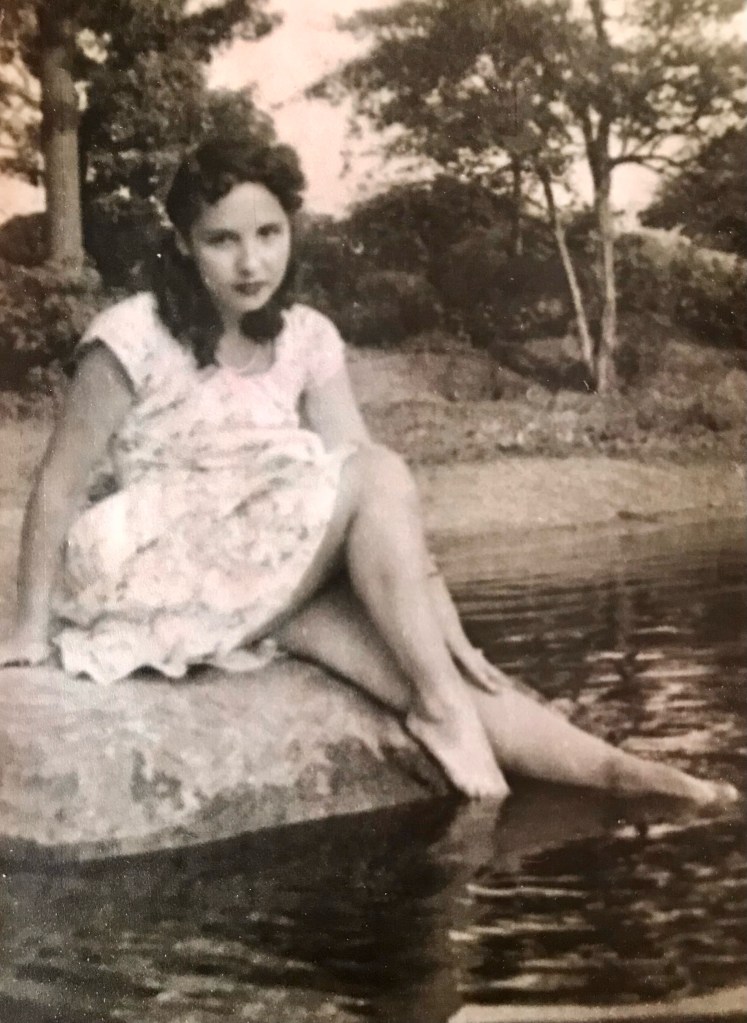
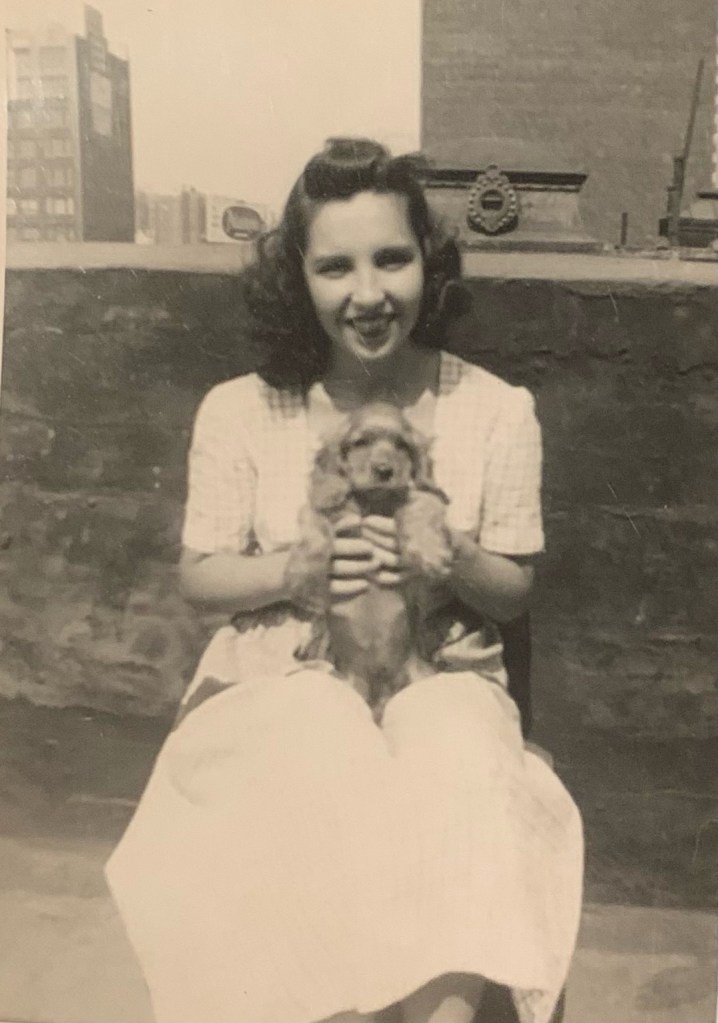
Welcome to a woman song, a melody of stories about a woman named Florence and Hughes. Throughout the interview, my dad can be heard anxiously rubbing his hands on his pants. It’s hard to sum up my granny’s life into a single moment.
One of the first things I learned about my granny was that she used to build planes long before I knew anything about World War Two. And long before I knew the name Rosie the Riveter.
Robert
She was a Riveter, Rosie the Riveter. You know, back then, and and I think the reason was, I can’t remember how much it was, but that those jobs actually paid really well. And I think it was like $50 A week or something like that, which doesn’t sound like a lot, but it was. And so she was like doing a riveting of, you know, wings on airplanes. Right. So, um, and, you know, it was during World War Two.
Olivia
Riveting marked in era of glamorizing industrial work.
It was a dangerous job.
So she was nervous when she was a riveter?
Robert
Oh, yeah. Yeah. You know, I mean, it was you know, your riveting on you know, wings and I mean, really, I don’t know what type of training they went through. But your granny wasn’t exactly like an auto mechanic by any means us like, your granny was like five feet tall, maybe like 105 pounds, not really, you know, built for, you know, you know, putting together heavy machinery or anything like that. But you know, during that time period, you know, in during World War Two, all of the men you know, were over, you know, fighting the war. And so there was like a huge shortage and you know, so that’s that’s how she got into it. It wasn’t like she was like, Oh, I this is what I want to do with my life I want to, you know, you know, build mechanical objects, it was just like, oh, well, you know, this, this this pays really well. And, you know, so I should, you know, do this right. So that’s, that’s why she did it.
Olivia
Most people think of Rosie the Riveter, they think of the poster, a young woman hair pulled back and in red and white polka dot bandana with a blue crumpled up mechanic shirt, her arm and a power pose puffed up and flexed. But most of all people think of the phrase, you can do it.
Archive Recording
Yesterday, the pioneer woman helped to win a continent. Today with the same spirit of determination. American women are working to save this way of life, working to save the nation from the impact of total war, working to build a shore defense.
Olivia
But not everyone can do it. Not everyone is allowed.
Robert
She eventually got fired. Because she didn’t have the money to buy her own toolbox. Right. And so she used to have to borrow tools from from other people, you know, with a tough time. And she just didn’t have the money to do that. So she just stretched out as long as she could. And then, you know, you know, the inevitable happened.
Olivia
I remember you told me before that she would have to borrow tools from other workers.
Robert
Yes, that’s how that’s how she did it. So I mean, I don’t know what tools they used, right? Because you had a riveting machine, but I’m sure you had to, you know, use screwdrivers and wrenches and all sorts of stuff that, you know, you would see probably in your toolbox in your garage, except the tools would be a lot larger. And, and she didn’t have any of them. So but you know, by frankly, she had always said it was a relief when she got laid off because she was always frayed, you know, she listened on the radio and the plane crashed or something like that. She was like, Oh my gosh, did I mess up that wing or something? You know, so. So as always, you know, it was a it was a stressful time.
Olivia
Riveting was not the only opportunity open to most that seemingly had contingencies and rules that barred my granny from living the life working the jobs she wished to do.
I remember you also said that she tried to join what was the Navy?
Robert
Oh, yeah. Yeah, so that’s an interesting. So um, so you’re, your granny was deaf in one ear? Right? Because I think when she was eight years old, um, you know, she got hit by a baseball, and it and it totally, you know, destroyed her hearing in one ear. Right? She never had, she never actually had to use a hearing aid or anything like that her hearing was very good in her left ear. But ultimately, her hearing was always good enough that you would have never known that she was deaf in one year. So she wanted to go into the Navy as well. I’m not sure exactly what she thought she would do. I know she had told me at one point, but I can’t remember now. So obviously, you need to be able to hear out of both of your ears to go into the Navy. And so she passed all the tests. And then like for the hearing test, I guess she tried to fake it right through the hearing test. You know how like you just, you know, think you’re on a rhythm and so you’ll kind of raise your right hand because you remember when they were testing your other ear, you know how often you would raise your hand that well, they caught her. So she couldn’t ultimately go into the into the Navy and I think she was disappointed. Because, you know, I guess you get to maybe travel the world or you know who and who knows but I’m sure there were some sort of job that she would have tried to do that would have been somewhere along the lines artistically. And it just didn’t work out.
Olivia
Was that during World War Two?
Robert
Oh, yes. Yeah. So, yeah, that was during World War Two, because, you know, she was in her early 20s through World War Two, I can’t remember exactly when world war two ended. But, you know, certainly, I think maybe it was 1944 1945 that world war two ended in so she was born in 23. So, you know, literally, she was like, you know, late 18, through early 20s. Through through probably 23. When world war two ended.
Olivia
So my age.
Robert
Exactly, your age. So yeah, it’s just think about how different your life was from from her. Right.
Olivia
My dad is right. We lived very different lives, lives that only briefly intersected for four or five years. But her poetry and writing are like a lasso through time, pulling her back to me.
I learned that she was a Riveter. A Navy would be, I learned that she used to read poetry to me, and can sit in front of paintings for hours, and I learned about her successes.
I saw that some of these poems are they were published? Out elsewhere? Oh, yeah. So she’s, she’s submit?
Robert
Oh, yeah. Yeah, yeah. So you know, she she was published? I think she was published in the New Yorker. Really? Yeah. I think so. I mean, she was published in a lot of different, you know, local magazines, but I think she also might have gotten this is, you know, a long time ago. So and in your, your grandfather was kind of managing, you know, all of the work for that. I mean, it’s very difficult. You could be kind of successful at poetry. And I think she was pretty successful at poetry. And I was told at least at one point, she was required reading after she graduated from SUNY at Stony Brook in, in, in the poetry classes. But maybe someday you’ll take that booklet and turn it into something and put it up on Amazon and we’ll make you know, $1 or sell or something like that.
Olivia
Well, I remember you said you wanted to do that.
Robert
I do. I do. Yeah, so maybe, maybe it’s got to wait until I retire in the next four years.
Olivia
My last memory of my granny is intertwined with another and remember a red Valentine’s dress. I remember her giving it to me. And I remember my pop up giving me a yellow dancing bunny on her behalf. She is a flicker fluttering around me. I can’t quite catch her. But I can feel her words, only for a few moments. dainty like a butterfly.
Robert
So this one is called blue butterflies. I’m just gonna read this one because I see it’s short. And you know, you could see the some of these as well. She was writing towards the end of her life. And you know, honestly, she started to do most of this poems. You know, late in life, so blue butterflies. I’ll read this to you.
When I think of dying. I think of blue butterflies. iridescent wings pinned against the white wall. Under airless glass. Their centers dried like smudges of Old Blood. Blue flutter last in a final stillness.
 By Olivia Bridges